Artists and Musicians
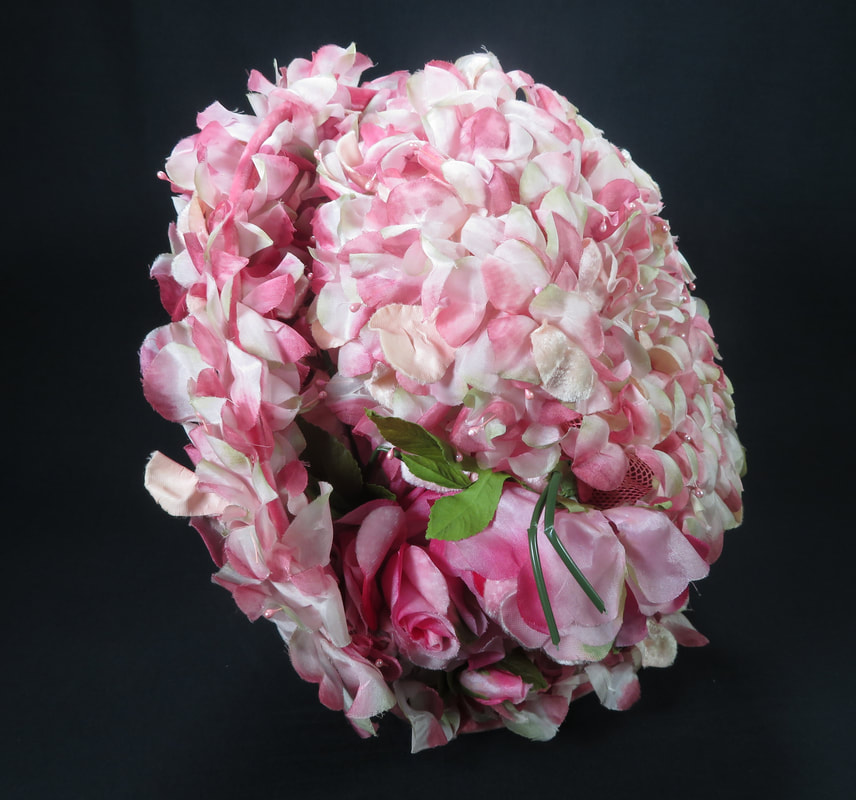
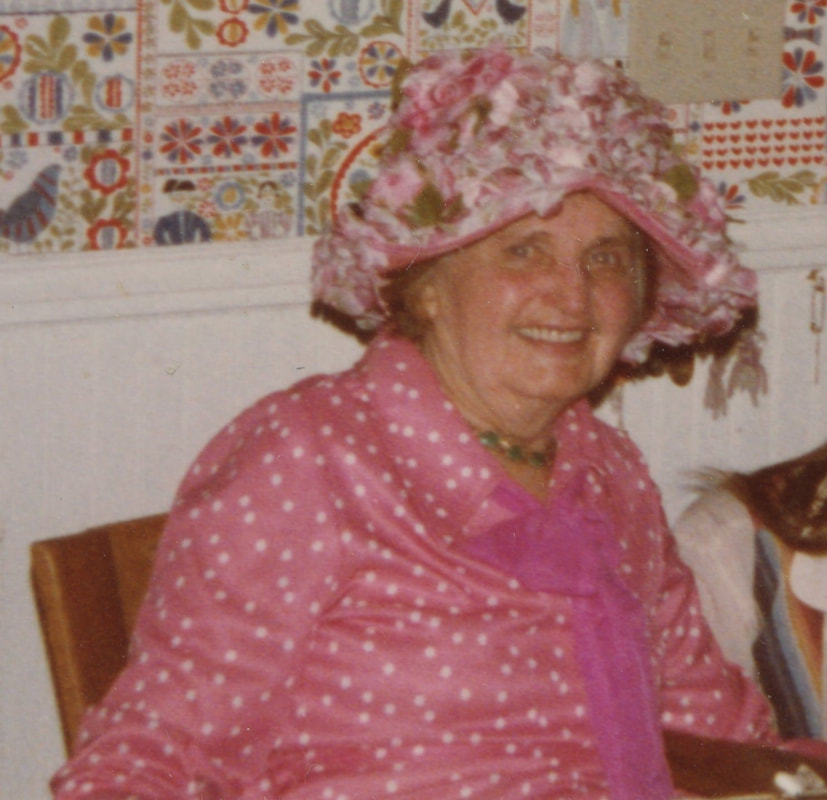
Pink Floral Hat 1950s
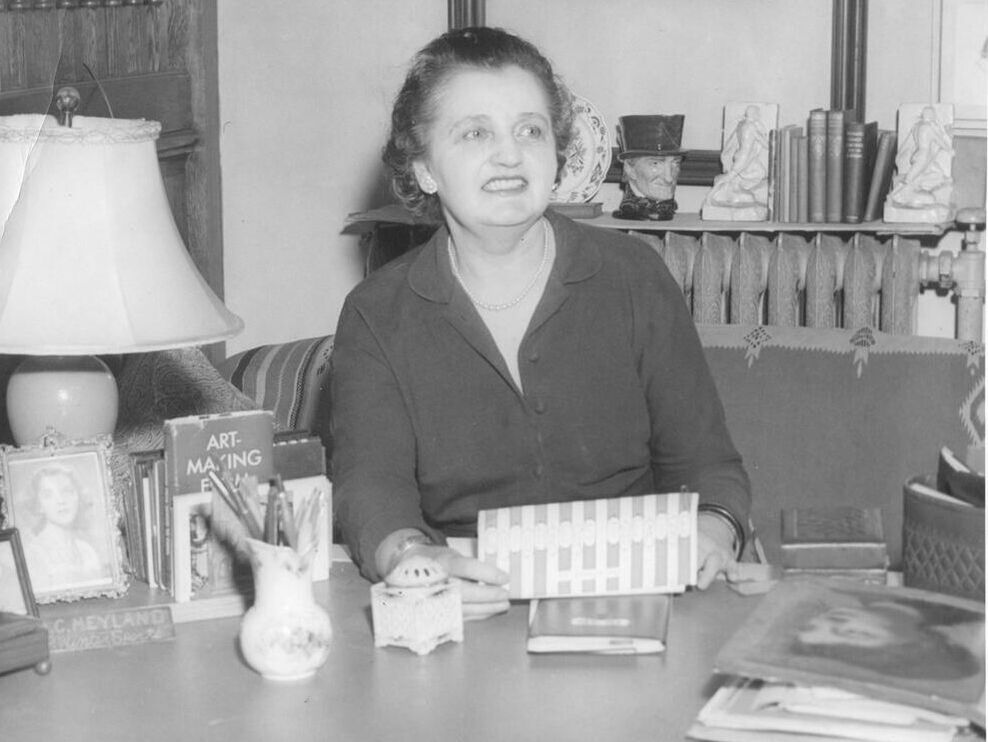
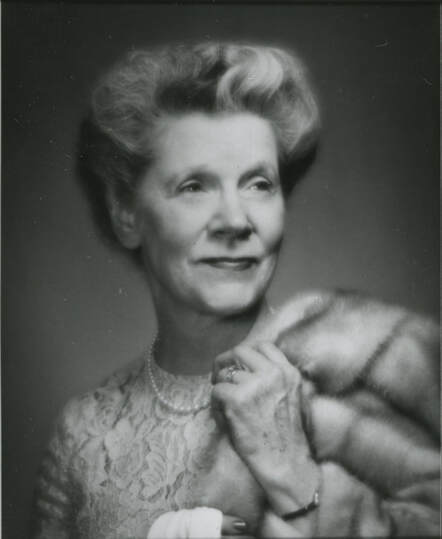
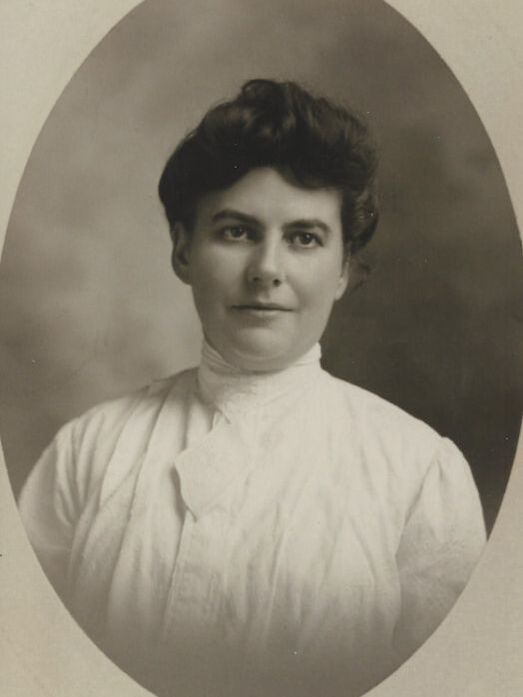
Anita Meyland (1897-1995) Anita Elke Meyland grew up in an artistic family in Milwaukee. Her father, Fredrick Elke, learned how to paint frescoes on wet plaster, just like Michelangelo, and his work decorated many churches in Milwaukee. Anita graduated from the University of Wisconsin in 1917 and became an art teacher in Milwaukee. In 1924 she married Gunther Meyland, an English teacher, and they moved to Marquette where he had been hired by the normal school (now NMU). They had one daughter, Charlotte. Anita taught in the Marquette and Ishpeming schools as well as for community groups. She brought a group of women painters together who met every week for eleven years, studying a new painter each week and then learning to paint in that style. She created a children’s program called “The Paintbox,” on Saturday mornings. She also taught elderly artists at Pineridge Apartments. Anita is most famous for organizing and naming Marquette’s first “Art on the Rocks” show in 1950, showing the work of ten local artists, most of whom she had trained. The show has continued and expanded to include artists from across the country. Anita earned many awards for her work in the arts. The gazebo at Presque Isle was built in her honor. 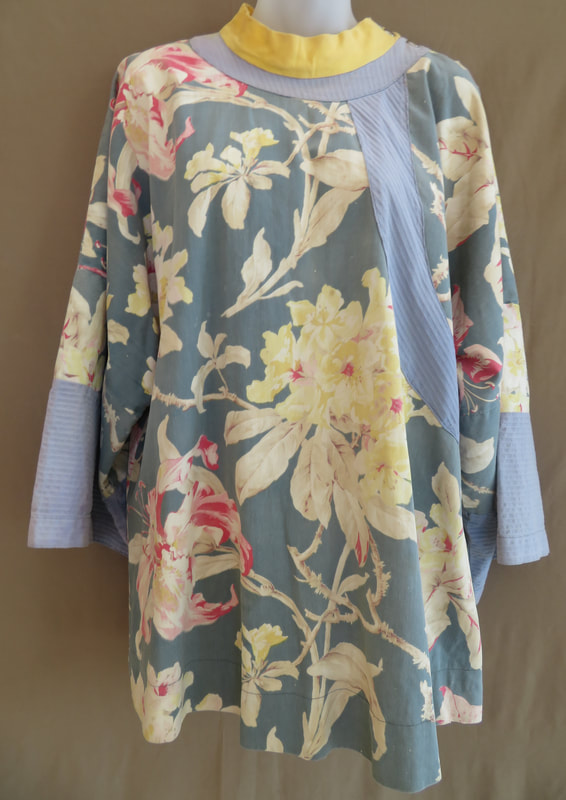
|
Handmade Smock and Purse
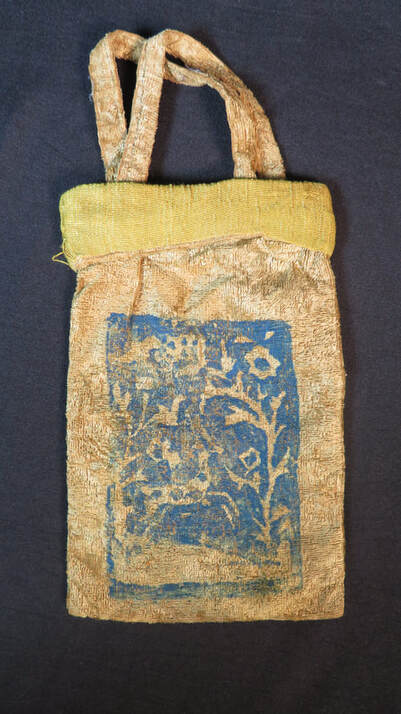
Vida Lautner (1886-1978) Vida made and wore these. A total of eleven small, handmade fabric purses were donated. Born Vida Cathleen Gallagher in Cheboygan, Michigan, she graduated from Northern Normal with a Life Teacher’s certificate (her first degree). She married John Lautner, Sr, a professor at Northern Normal in 1907. They had a son and daughter. Their son John studied architecture with Frank Lloyd Wright in the 1930s and became an important architect in California. Vida was interested in interior design and clothing design. The couple thoughtfully designed their Marquette home and a Norwegian inspired log cabin at Middle Island Point. Keepsake at 1308 Presque Isle Avenue is a New England salt box style designed by Joy Wheeler Dow. The house was unlike most homes built at that time. Although a traditional style was chosen and some antiques were used in furnishing the home, it made use of many cultural styles. Leaded glass windows came from England and wooden venetian blinds from Sweden. The house is located across the street from the college. Vida decorated the home including murals on the kitchen walls. The cabin, Midgaard, was built by the whole family. Vida decorated the Norwegian style log cabin with textiles and artwork, including many of her own works and hand painted the cupboards and second floor railings. Vida returned to Northern State Teacher’s College in 1924 for a Bachelor of Arts degree. After her husband died in 1943, she moved to Chicago. She regularly summered in Marquette and died here at the age of 91. In Chicago, Vida enjoyed painting landscapes of the city. She studied at the Art Institute, and her work took a more abstract form. She received an honorable mention in textile design competition from the Art Alliance of America in New York in 1925. She exhibited her work at the Detroit Institute of Arts, the Art Institute in Chicago, and at Marquette’s Women’s Club. In 1942 she was accepted as a member into Michigan Academy of Science, Arts and Letters. Mrs. Lautner was a most amazing woman. She was tall and she always wore the same colors, and she did hats like they were going out of style, and the colors were always the pinks, the reds and the purples. She told me that the way she picked her colors was that there are columbines that are growing up at camp at the top of the hill. And the colors of the columbine were those blues and pinks. Allyn Roberts, friend of the Lautners 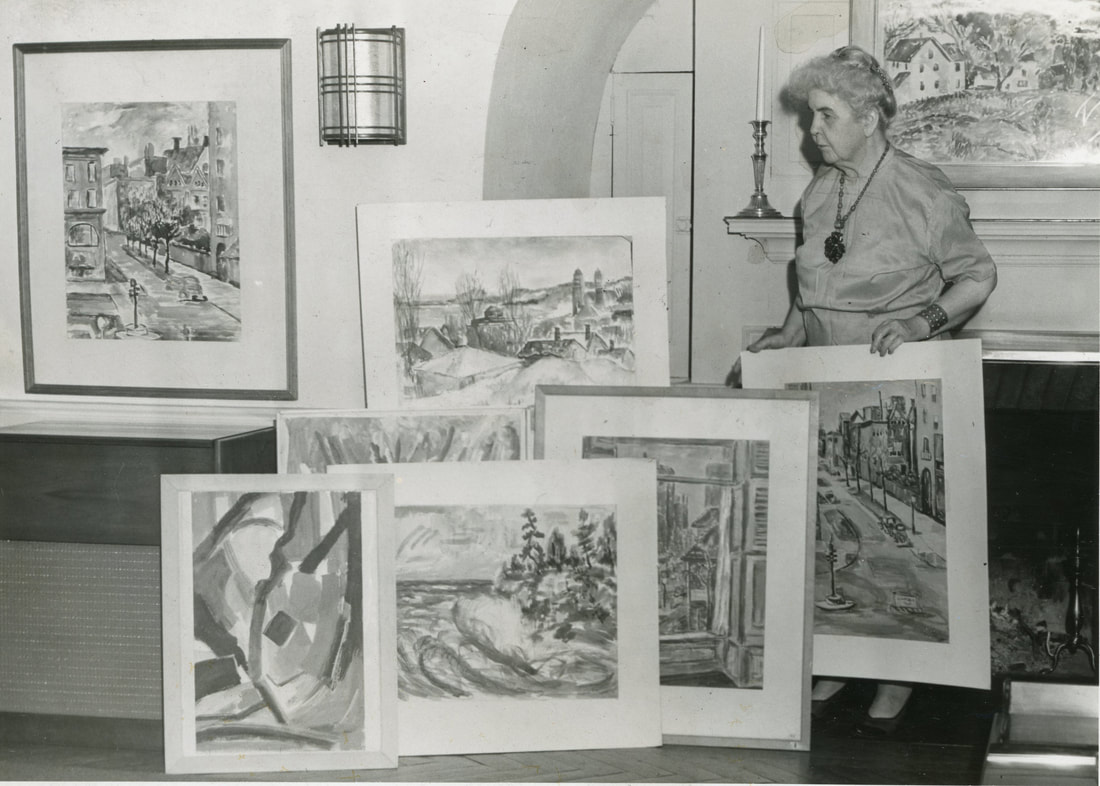
|
|
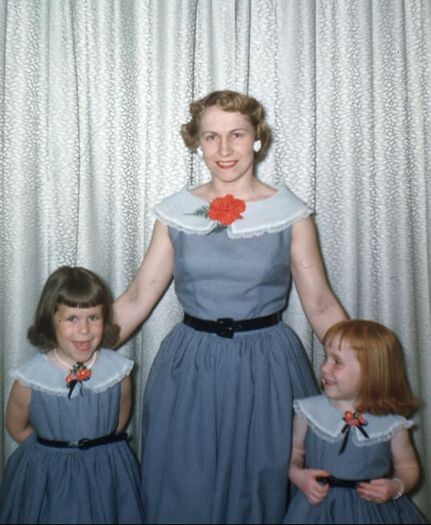
Homemade Suit, 1955
Pat Draeger Virch (1926-2019) Born in South Dakota and raised on a farm in Wisconsin, Pat wasn’t interested in farm life or being a farmer’s wife. She married Niron Virch in 1946 who had a good job at the telephone company. The couple started a family and moved to Marquette in the 1960s. They raised three daughters and one son. Pat began sewing her clothing when she was living at home. She picked cucumbers for money to buy fabric and notions. As a mother of four, she sewed most of her own clothing as well as clothing for her children for many years. Pat also enjoyed singing and was artistic in other endeavors. Pat began studying Norwegian rosemaling in the 1960s. She authored several books and articles and taught classes, becoming not just a local resource, but a proponent of the craft nationally. She exhibited her work at Art on the Rocks and received the Gold Medal for rosemaling from the Vesterheim, the National Norwegian-American Museum and Heritage Center. Pat and her husband Niron began a business supplying rosemaling supplies. Pat dressed in traditional Norwegian clothing she sewed herself when teaching her classes and for other presentations. 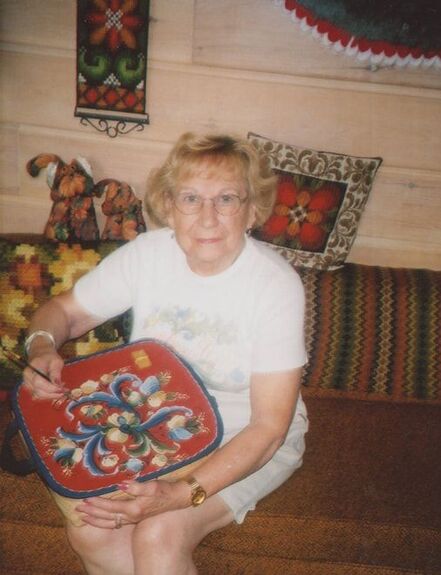
|

|
|
USO Hat
Bruno Laakko (1907-1989) Bruno was a jazz musician and composer born in Ishpeming to Finnish parents. He played the alto saxophone and clarinet. He taught music for 20 years in Sandy Springs, Maryland. This hat comes from his service in the Far East in 1954-55. Since World War II, the USO has been providing entertainment to the US military. |

|
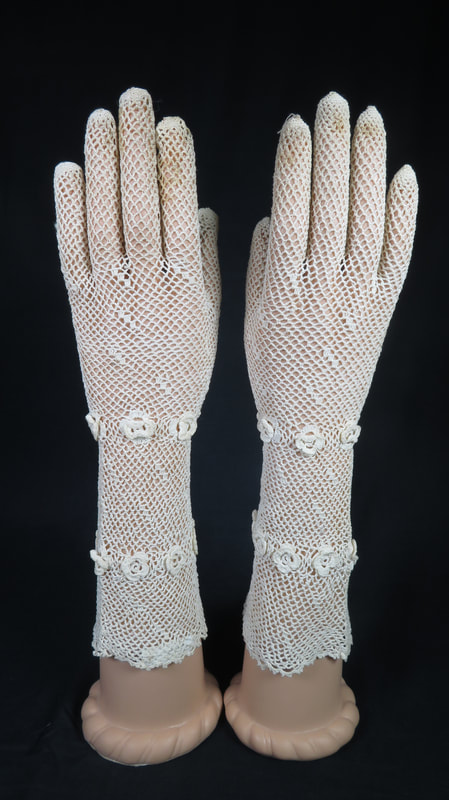
Irish Lace Crocheted Gloves
Dorothy Maywood Bird (1899-1989) Dorothy Bird was born in Crystal Falls. Her father was a minister and moved the family to Marquette to take a position in the First Methodist Church in 1904. The family only lived here a few years but the area made a big impression on Dorothy. Dorothy attended the University of Michigan where she sold her first manuscript. She married attorney John Wendell Bird. She was a children’s librarian at the Detroit Public Library. The couple had four children and Dorothy wrote book reviews as well as adult and juvenile fiction for magazines. She wrote a set of three mysteries for junior high audience in the 1940s: Granite Harbor, Mystery at Laughing Water, and the Black Opal all set in the Marquette area. Dorothy owned a home at Middle Island Point and lived year round in Marquette from 1968 to 1982. Mrs. Bird was community minded: she was an advocate of world peace, active in an environmental group, worked for area beautification, and formed a writers group. Her home was also the site of the newly formed Planned Parenthood. These crocheted gloves date to the 1940s and 1950s. For many decades gloves were both practical and fashionable. They were considered a sign of modesty, sanitary, and made even a working class woman elevated (by hiding her working hands). |
|
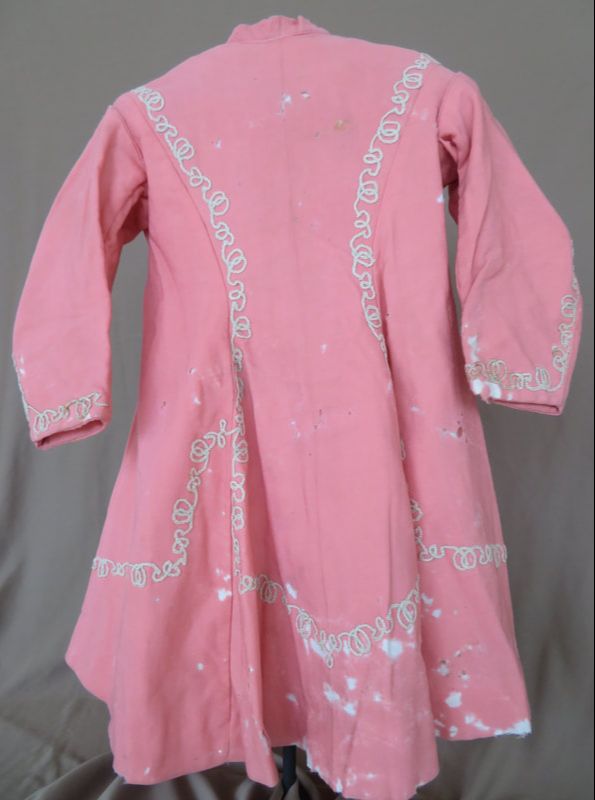
Wool Dress
Caroline Watson Rankin (1863-1945)
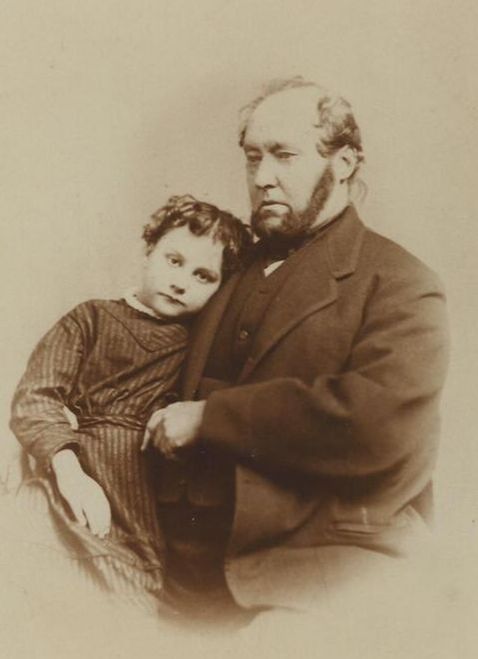
Born to pioneers Jonas and Emily Watson, Caroline was the youngest of ten children. Her father operated one of town’s first stores. When she was around four years ago in 1868—around the time she wore this dress--Marquette burned down. Pictured here with her father.
Caroline attended a private boarding school in Kenosha, Wisconsin and returned to Marquette when she was 16 years old. Shortly after, she read an advertisement in the Daily Mining Journal stating, “Wanted, A Bright Boy to Do Reporting.” She marched right down to the newspaper office. Caroline recalled, “I can still see the twinkle in Mr. Russell’s eye, as I explained that, While I wasn’t a boy, I was most sure that I was bright!” She got the job and began reporting all of the society news about engagements, weddings, parties, and general town gossip. She held that job for six years until she married Ernest Rankin.
The couple had four children and lived on Ridge Street next to the Episcopal Church. Ernest often traveled for his job with the railroad. Caroline stayed busy caring for her children and home and writing articles and books. She wrote ten children’s books, including Dandelion Cottage which is still in print today.
Caroline Watson Rankin (1863-1945)
Born to pioneers Jonas and Emily Watson, Caroline was the youngest of ten children. Her father operated one of town’s first stores. When she was around four years ago in 1868—around the time she wore this dress--Marquette burned down. Pictured here with her father.
Caroline attended a private boarding school in Kenosha, Wisconsin and returned to Marquette when she was 16 years old. Shortly after, she read an advertisement in the Daily Mining Journal stating, “Wanted, A Bright Boy to Do Reporting.” She marched right down to the newspaper office. Caroline recalled, “I can still see the twinkle in Mr. Russell’s eye, as I explained that, While I wasn’t a boy, I was most sure that I was bright!” She got the job and began reporting all of the society news about engagements, weddings, parties, and general town gossip. She held that job for six years until she married Ernest Rankin.
The couple had four children and lived on Ridge Street next to the Episcopal Church. Ernest often traveled for his job with the railroad. Caroline stayed busy caring for her children and home and writing articles and books. She wrote ten children’s books, including Dandelion Cottage which is still in print today.
|
|
Learn more about local people and their clothing through these subjects:
Pioneers and Immigrants | Made with Love, Reused & Recycled
Teachers and School Days | Artists & Musicians
Men at Work and Play | Hunting, Riding, and More
Pioneers and Immigrants | Made with Love, Reused & Recycled
Teachers and School Days | Artists & Musicians
Men at Work and Play | Hunting, Riding, and More